Witness For The Prosecution

By Agatha Christie. Director: Ian Fletcher. Henry Lawson Theatre, Werrington, NSW. 21 Aug – 5 Sept, 2026

Reviewed : 21 August, 2026 *

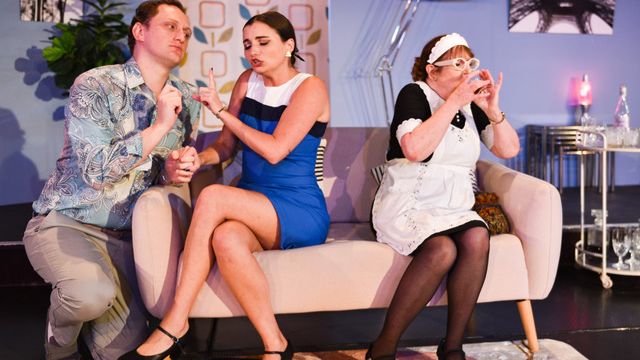
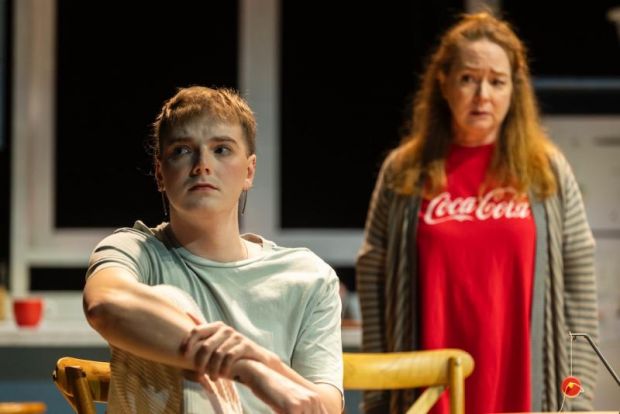
Photo : Rebecca Fletcher

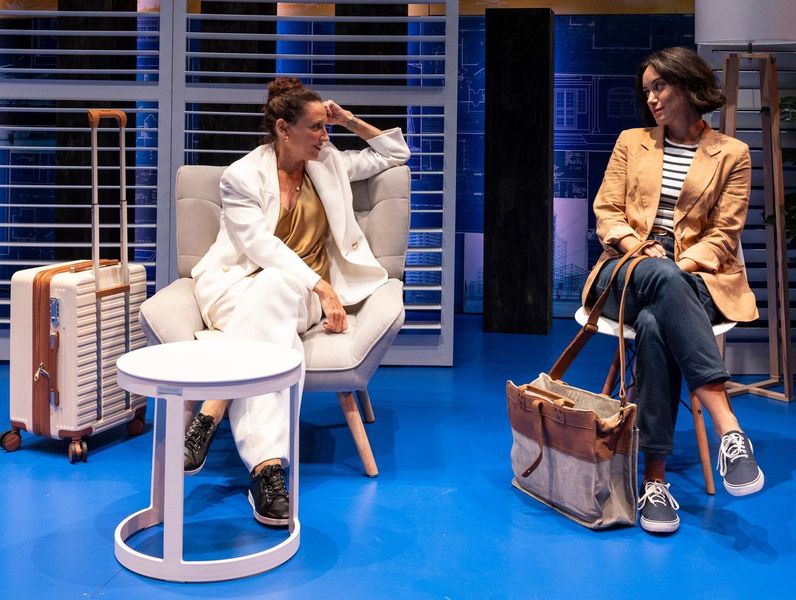
Three acts and a cast of nineteen set in a courtroom is a big ask of any director but Ian Fletcher is nothing but ambitious! Not only has he directed this production, but designed and built, with a little bit of help, a very impressive set.

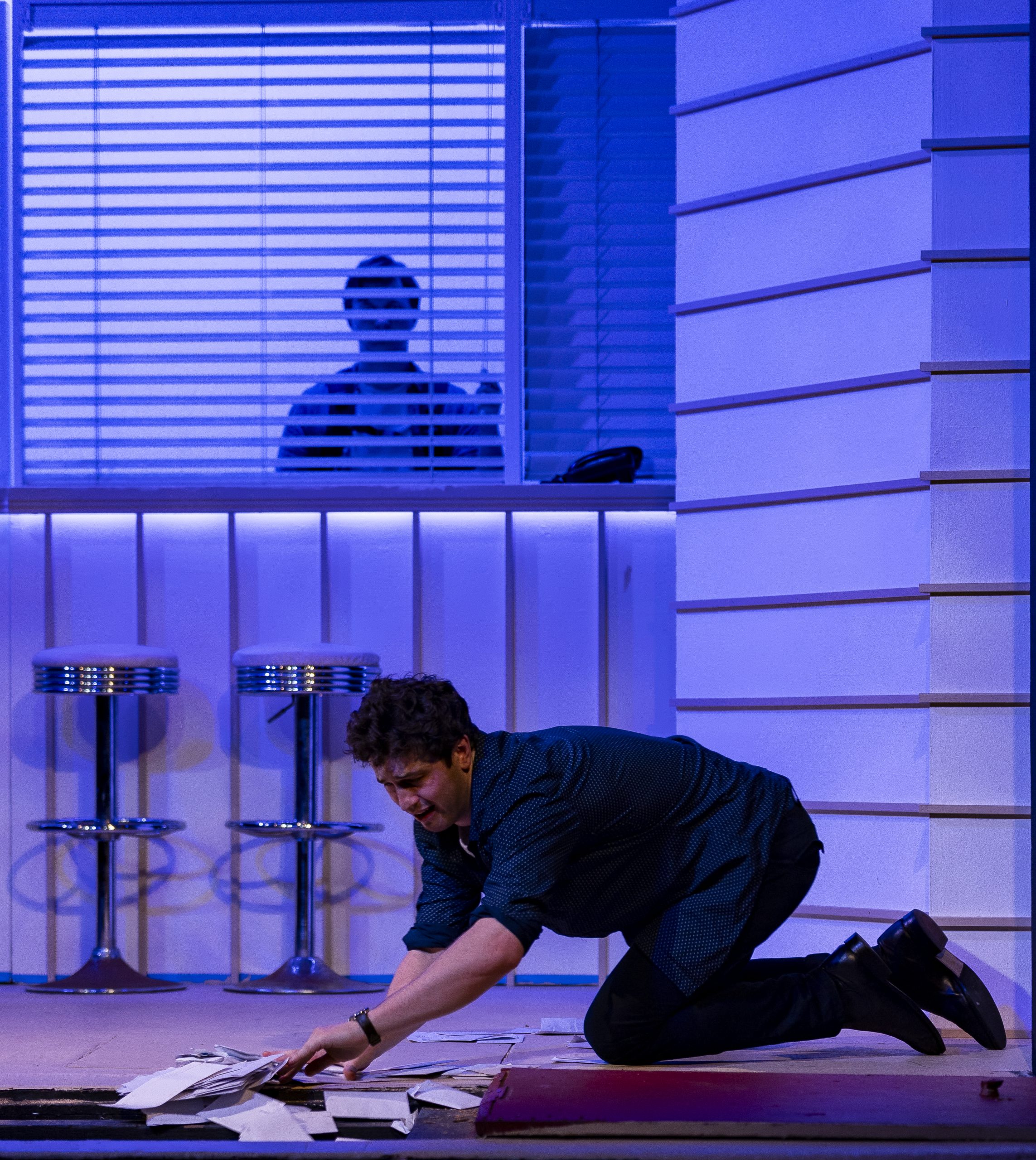
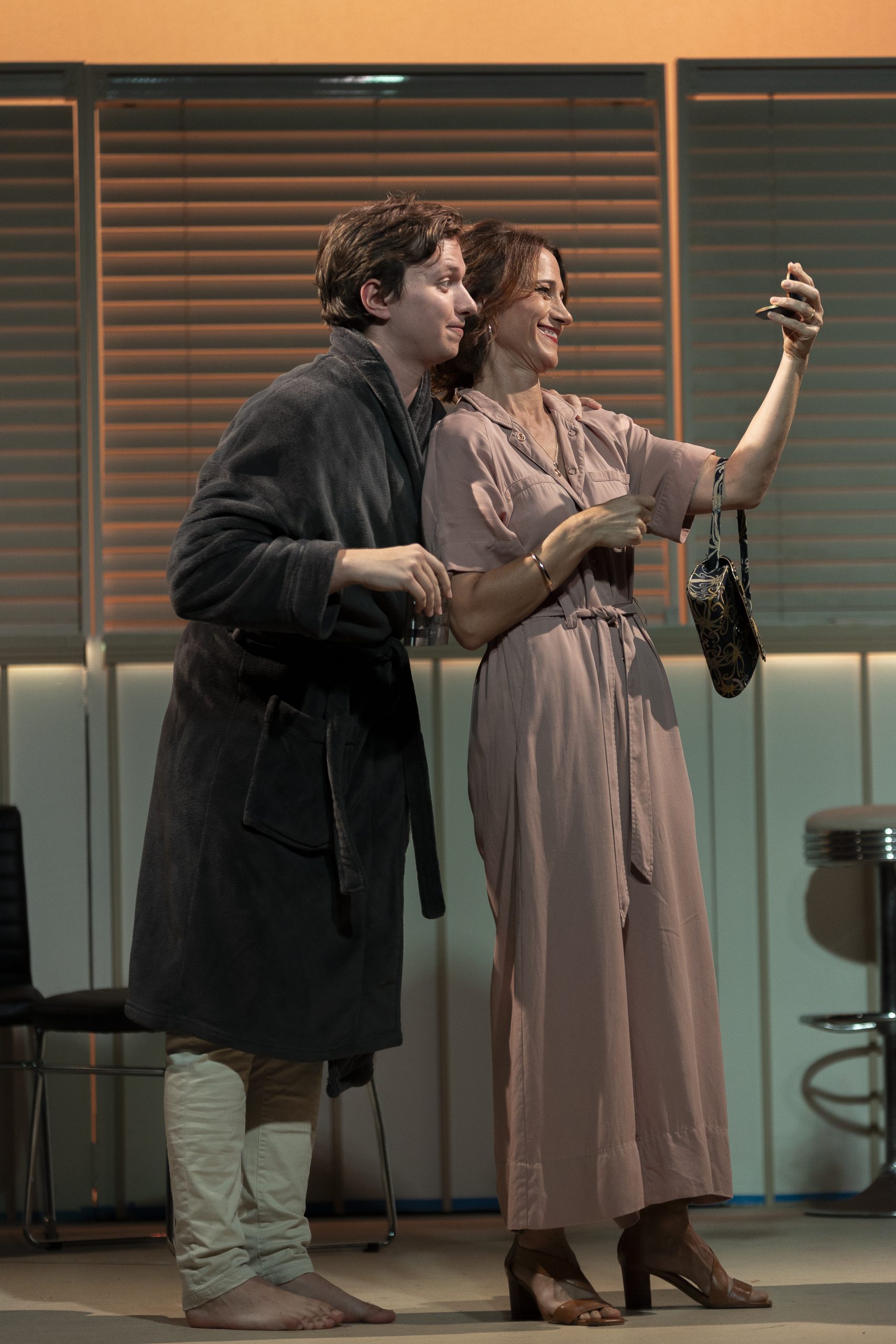
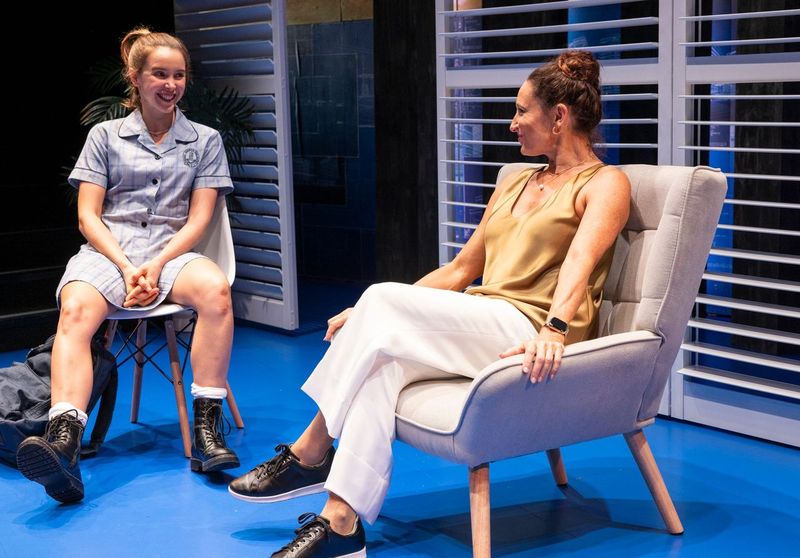
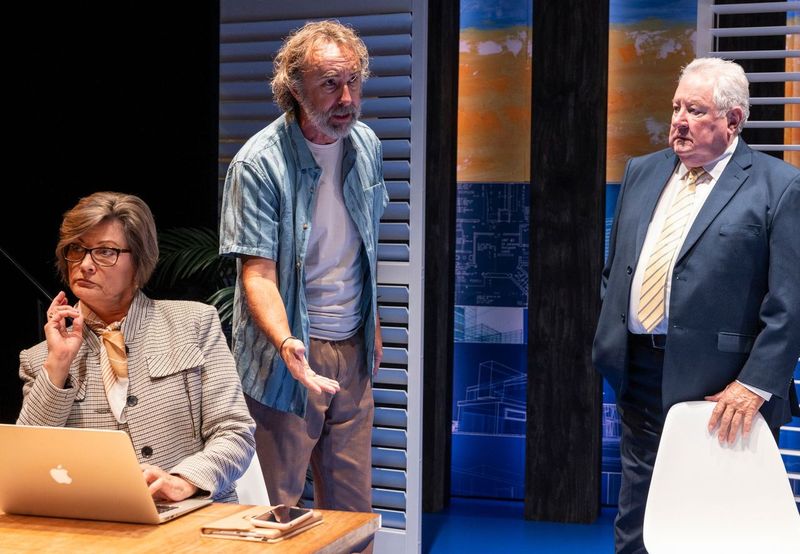
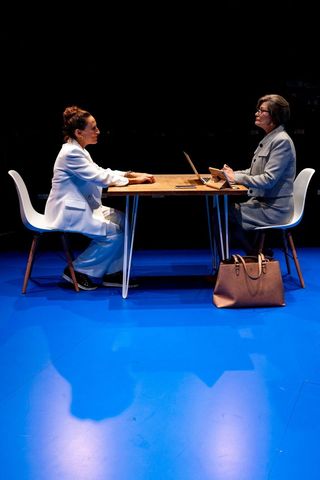
Using the full width and depth of the stage, Fletcher has created a courtroom that is a realistically solid and sombre and a perfect background for the complications that are always expected of a Christie mystery. Costume designer Barbara Vasilescu has cleverly counterbalanced the black and white courtroom garb of the law fraternity that dominate most of the scenes by using colour as well as period context in the costumes of the witnesses. Between them, Fletcher and Vasilescu have matched the set and costumes with the rhythm and tenor of the play.

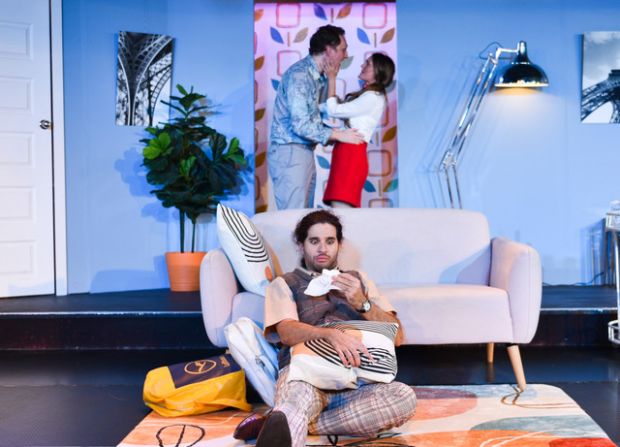
Photo : Rebecca Fletcher

The lighting is integral to the changes of tone in this production, and the use of contrasts to offset the soberness of the set works very effectively. Those behind the lighting ideas – Mark Prophet, Aurel Vasilescu and Brad Austin – also appear on stage and probably worked with others in the cast on the set as well. That’s what the “community” in community theatre means!

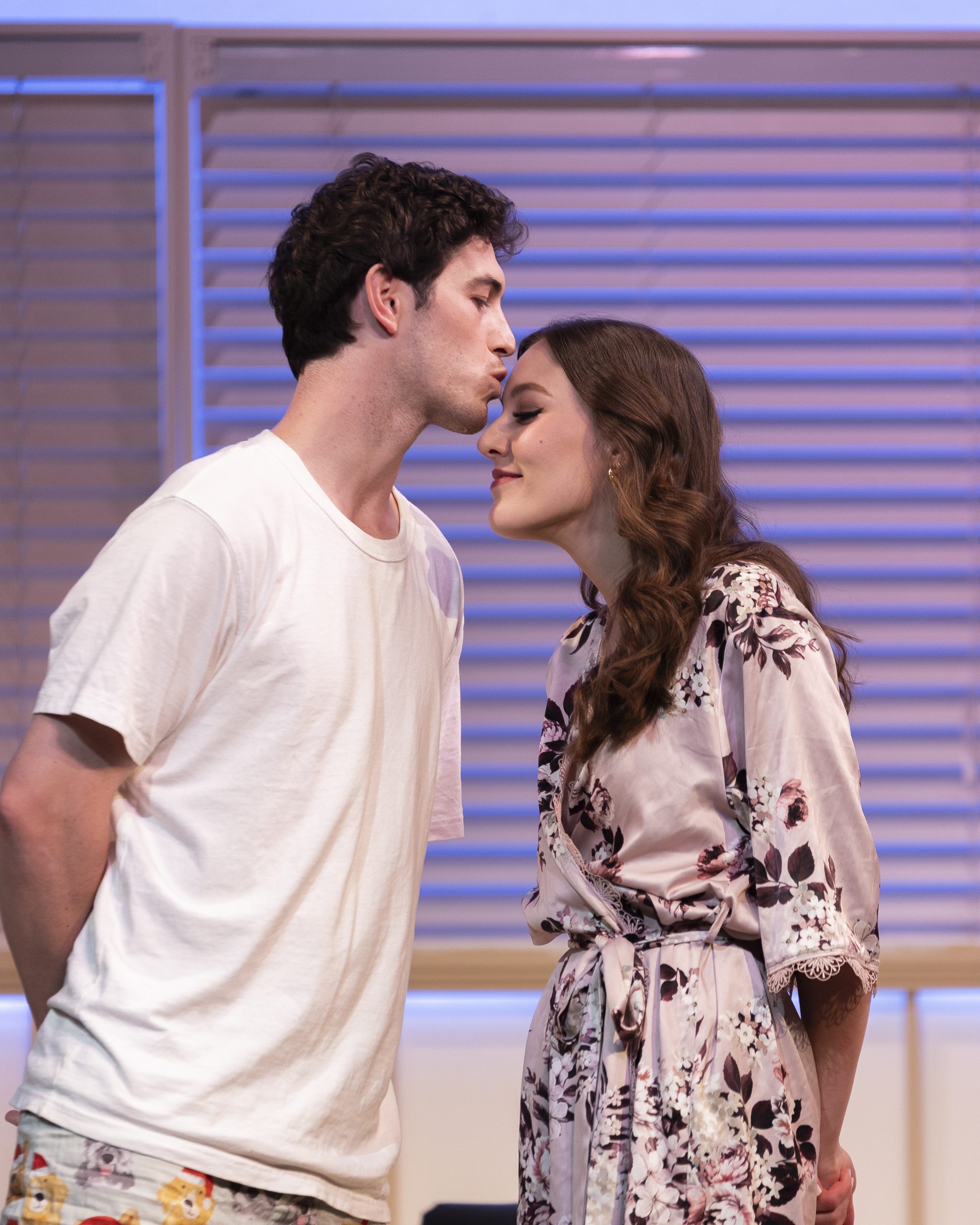
The play takes us back to Britain in the 1950s. The “defendant” Leonard Vole, a married man, who is being tried for the murder of Emily French, and elderly spinster who has left him most of her considerable wealth. The evidence against him becomes complicated when much to Vole’s surprise his German wife is called as a witness for the Prosecution. Little beknown to him this is part of a plot she has devised to secure Vole’s acquittal. Naturally there are twists and turns just a slippery as Christie’s usual red herrings – and an unexpected ending.

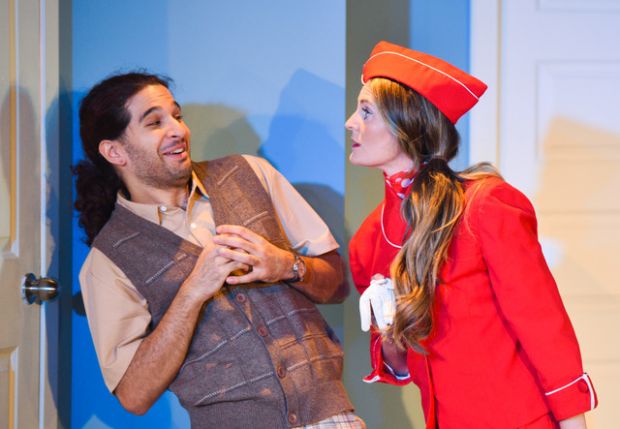
Photo : Rebecca Fletcher

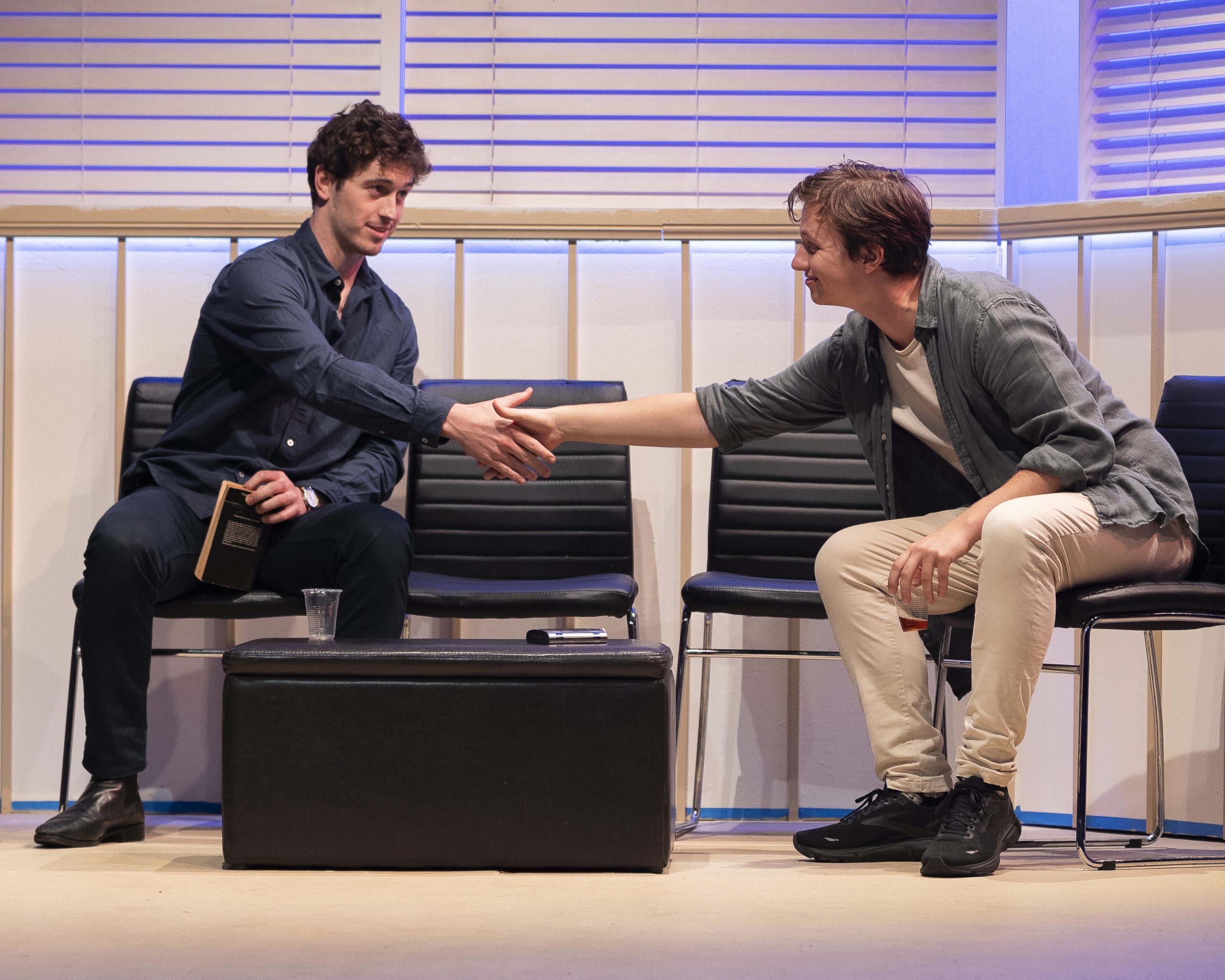
Fletcher uses lights and the downstage area to establish the office of solicitor Mayhew where Vole meets Sir Wilfred the Barrister for the Defence. Elliott Prophet establishes Mayhew as a very straight, competent legal practitioner, in contrast to the slightly more devious Sir Wilfred played with self-assured cunning by Bob Sparrow. They both take Christopher Pali as a somewhat naïve and trusting Leonard Vole through the events leading to his alleged offence.

Pali, making Vole wide-eyed and innocuous, tells them how he met the elderly Miss French when she had a mishap crossing the road with her shopping and consequently established an innocently supportive friendship with her. Impressed with the attention of his legal eagles, he relaxes with faith in their competence and learned assurances.

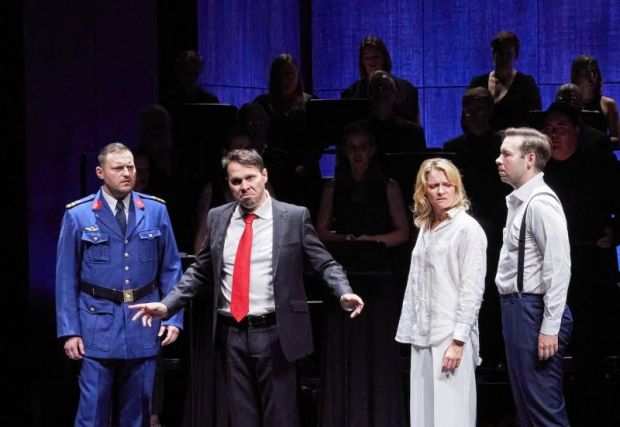
In the courtroom, Vole stands in the dock, supported by his defence team – and facing the lawyers for the Prosecution, lead by feisty Myers Q.C. played with confident cool by Mark Prophet. Presided over by Justice Wainwright (Glenn Levett), his red robes a sharp contrast to the back and white of the legal teams, the trial begins with Vole’s plea of “Not Guilty”.

Court Usher (Aurel Vasilescu) begins calling the witnesses for the Prosecution, including Miss French’s housekeeper Janet Mackenzie played very neatly and with a definite but understandable Scottish accent by Rosie Crossing. It is Mackenzie who establishes Vole’s presence at the house on the night of the murder.

Photo : Rebecca Fletcher

Inspector Hearne, played with suitable stern officiousness by Ken Fletcher, uses the proverbial policeman’s notebook to answer Myer’s question about his findings at the murder scene, including a broken window and glass on the garden outside the window, and what that inferred.

When Vole’s wife Romaine is called as a witness for the Prosecution, there is mumbling in the court – and Nicole Smith, playing Romaine, establishes a combination of mystery and hurt and the possibility of foreign deviousness as she faces the court, with her veiled but expressive eyes and accusations against Vole – who calls from the dock in denying shock.

Suffice to say, Sir Wilfred’s cross examinations are astute, but during the break in proceedings, he visited by a strange woman who leaves letters that will turn the case completely …

The remaining ten actors play a variety of roles essential to the complications and validity of the production including further witnesses, court officials, legal secretaries and another woman who is Agatha Christie’s final surprise. Their characterisation and concentration throughout the three acts are commendable, some of them, like Jini-Mary McDonald adding a little bit of humour that lifts the weighty tone of the play.

Photo : Rebecca Fletcher

Fletcher has obviously pushed the pace as much as possible to ensure the production isn’t weighed down by drawn out dialogue and slow action. It is incumbent on the cast to keep that pace – in order to keep the audience intrigued for three acts!

Witness for the Prosecution is a long play, with lots of twists and turns. Ian Fletcher and his cast kept the opening night audience on their toes right up the final surprise.
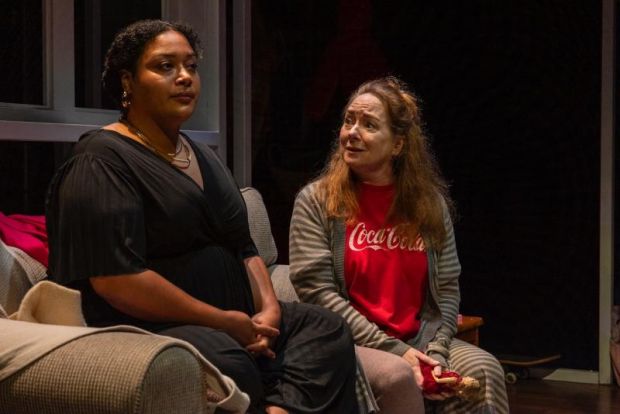
To find out what that is, you need to book your tickets quickly!

Also published in Stage Whispers magazine

* Opening Performance


Fiddler On The Roof

Trafalgar Entertainment;  “Tevye and His Daughters” stories by Sholem Aleichem. The book for the original stage musical was written by Joseph Stein, with music by Jerry Bock and lyrics by Sheldon Harnick; Current production : Director- Jordan Fein; Musical Director – Dominic Woodhead; Theatre Royal, Sydney; 31 July to 5 October, 2026

Seen : 19 August, 2026

Not Reviewed by Carol

Photo : website

Two Blood

Australian Dance Theatre. Co-Directors Daniel Riley. Jasmin Sheppard, S. Shakthidharan. Carriageworks Sydney: 13 – 15 August, 2026; Art House Wyong: 20 August & Monash Performing Arts Centre: 5 September.

Reviewed : 13 August, 2026

Photo : Morgan Sette

Two Blood begins with a softly told gold rush story of the skeletons of a Tagalaka woman and Cantonese man found entwined in a “forever embrace” centuries after their forbidden love led to their death in the “flames of burning country”.

Stories like theirs epitomise the complex historical ancestries of Australia. That remarkable complexity is elevated powerfully and honestly in this significant piece of theatre that reaches across time and distance, history and politics.

Photo : Morgan Sette

Performed by Zoe Wozniak, Yilin Kong, Maacon Escobal-Riley, Joshua Doctor, Remy Rochester, Carly Sheppard and Zachary Lopez Two Blood is a compelling statement that is at once violent and beautiful, volatile and poignant.

Daniel Riley, Jasmin Sheppard and S. Shakthidharan have combined dance, poetry, song, sound and light to create a performance shows how colliding cultures have left lasting imprints on our relationship to this land and each other. Riley and Sheppard’s choreography is diverse, almost desperate at times. There is a challenging complexity in the movement that stretches low and fast at times, unwinding across distance and time, yet unbelievably slow at others, protracted, almost paralysed.

Bodies reaching out and up, or cling together, suddenly pushing away as voices, and weapons, and opposing beliefs threaten to divide. There is pain in reaching arms, pleading faces and collapsing contours and low, sorrowful moans.

The dancers speak at times in English, Kaurna, Tagalaka, Tagalog, Hokkien and Yuwaalaraay, sometimes at length, sometimes in wispy phrases that reinforce their own diverse ancestry that is picked up by composers James Howard and Andy Qilong in music that moves from whisper-soft prayers to harsh, insistent drumming and strumming.

Photo : Morgan Sette

Lighting designer Matthew Adey uses two movable screens enclose the performers at times then stretch away giving space and wide distance. Wide strips of light race across the space at time or threaten from above at others as the performers “peel back the hidden truth of our nation to reveal enduring connections between First Peoples and migrants … to find the beauty of love, depth of cultural sharing, and an understanding of the connection of our ancestors”. (Jasmin Sheppard).

Two Blood is described as ‘urgent dance theatre about who we are and who we always have been”. “Urgent” might seem an unusual word to describe dance theatre, but as well as being a compelling, creative homage to the “deep complex histories beneath the surface of this country”, Two Blood also infers a call out to those who would deny the importance of “the multiplicity at the core of Australian identity”.

First published in Stage Whispers magazine.

* Opening performance

Les Femmes

The Grand Electric, Sydney. 9 August, 18 Oct, and 29 Nov, 202

Reviewed : 9 August, 2026

Photo : supplied

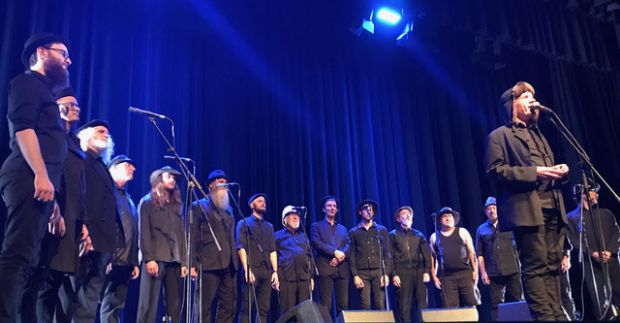
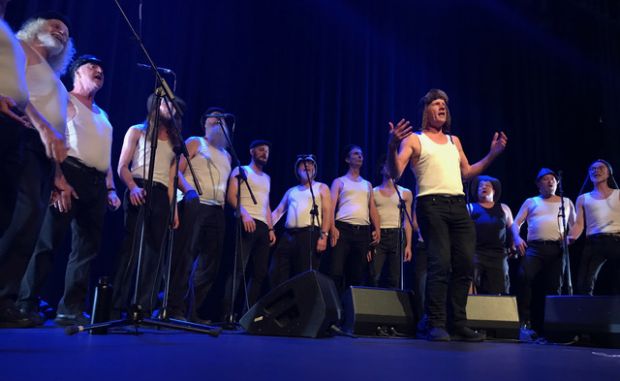
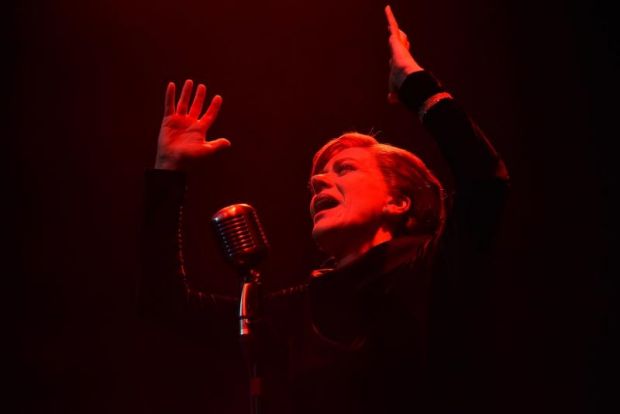
Les Femmes are Emma Mylott, Jacinta Gulisano and Tia Gigliotti – a trio of fabulous, feisty female performers who sing and dance in a cleverly arranged and choreographed performance that is enchanting and totally exhilarating. With experience across rock, pop and rhythm and blues, these three dynamic women have devised a program that highlights their very special chemistry … not just as performers, but as entertainers.

Their singing and harmonies are exceptional. They are movers and shakers as well, their choreography as meticulously rehearsed and timed as their singing. But that’s not all! They have built the program around a narrative that is more than just music, one that gives these three clever women a chance to be a bit provocative, even a bit cynical. A chance to add a bit of sass to their songs!

They begin with songs like “That’s Life” and “When a Man Loves a Woman” that have been made famous by male voices! A sort of cheeky “top that” that shows off their range, their flexibility, their control … and their charm.

Photo : Facebook

Having completely roped the audience in, they hit them a question: Can a woman have a male best friend? Is it possible to keep a relationship platonic? Answers from the audience lead to another medley. In “Feeling Good”, “Thriller” and “Footloose” they exemplify the timing and cohesion of their special collaboration, closing with an incredible rendition of “Somebody to Love” that has the audience spellbound.

Their story then moves on to their first true loves – their “dads” – and the music that played through their childhoods: Elton John, Billy Joel …  “How Wonderful Life is While You’re in the World”, “Rocket Man” “Wild World”, “American Pie” and finally “Piano Man” take the audience through a couple of decades of songs played to “My Girl” by some very ‘with it’ dads!

That’s just the first half of the program! The audience is left in awe of the individual power of each of their voices, their beautiful harmony and how well they can move – which they certainly do in the second half of the show.

Photo : suppled

A change into sparkly pants and waistcoats and some pretty jazzy choreography to “Versace on the Floor” and “Senorita”  begins a tongue-in-cheek tribute to men they have dated – “It’s A Man’s World” – and finally songs for the “good guys”, those men that have been special, men that made them feel “More Than A Woman”. This final medley includes “Funky Music” and brilliant versions of “Stayin’ Alive” and “Celebrate” which leave the audience on its feet calling for more.

And they don’t disappoint! They return to the stage with a tribute to great Australian hits including “It’s a Long Way to the Top”, “Eagle Rock”, “The Horses” and “You’re the Voice”.

They’ll be back making beautiful music at the wonderful Grand Electric for two more shows on October 19th and November 29th. Book early and get ringside seats so you’re up close and personal!

Firs published in Stage Whispers Magazine


Top Silk

By David Williamson. Ensemble Theatre. Director Mark Kilmurry. 31 July – 12 September, 2026

Reviewed : August 5, 2026 *

Photo : Prudence Upton

Could a play written in 1989 about the law, justice, ambition, politics, education and family dynamics still resonate today? The answer is “Yes!” – especially if it was written by a playwright as perspicacious and perceptive as David Williamson and directed by someone as astute as Mark Kilmurry.

Top Silk is one of Williamson’s serious plays. His wit and wisdom without the comedy. This production highlights the fact that even after 37 years of technological and social change society hasn’t really altered very much. Plus ça change, plus c’est la même chose is as true today as it was when Jean-Baptiste Karr first coined the phrase in 1849.

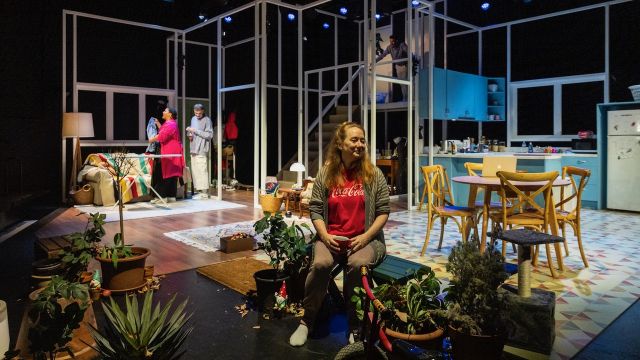
Kilmurry directs Williamson’s trademark short, pithy scenes in a flicker-fast pace that is almost filmic. It works perfectly on Ailsa Paterson’s cleverly designed set that gives the impression of a wide focus lens drawing the audience into the action. Spare and clean, and ingeniously functional, it seamlessly becomes a living room an office, a prison interview room, a café, a courtroom.

The action is fast, the inter-relating themes unfurling as the actors reveal the flaws and frailties of the characters and the powerful world of law and politics in which they move.

Kilmurry trusts his audience keep the same pace as he expects of his cast, yet gives them, with the help of lighting designer Kelsey Lee’s carefully timed fades at the end of each scene, the chance to fix the moment clearly.

Photo : Prudence Upton

Williamson’s plot revolves around the Fredericks family, Jane a legal aid solicitor and Trevor a barrister with political aspirations. They have left of centre views despite the wealth they have accumulated. Their son Mark, in his final year at high school, is not a scholar, but has strong social justice views and is still angry with his father for representing the developers that had welfare recipients thrown out of social housing.

Imagine Jane’s surprise when her new client, a small-time drug dealer, happens to be an ex-boyfriend from her country schooldays. Jane’s compassion leads her to an ill-considered decision that almost ruins her career and has a deleterious effect on the family.

Rachel Gordon, as Jane, finds the character’s compassion and her strength and intelligence. Her Jane is quick thinking and articulate, down to earth, but understanding and empathetic, especially for her son – and for Eddie O’Donnell, who has suddenly appeared again in her life. Gordon gives Jane the grit and the commitment to stick by her values – and do what she feels she has to do despite the consequences.

Photo : Prudence Upton

Her husband Trevor, played by Nicholas Brown, espouses similar values, but is much more ambitious. He’s made good and is on his way to a safe state seat. Brown finds both the humane-ness of the character as well as the driving determination to succeed that has affected his relationship with his son. Williamson moves Trevor through a gamut of emotional situations and Brown depicts them all with believable intensity.

Mark Fredericks is played by Samir Nasser, a newcomer to the Sydney theatre scene. Nasser gives Mark the social conscience fostered by his parents but marries it with the loss of faith and belief in his father – and his own belief in himself. This is a delicately written role, and Nasser shows all the perceptions about youth implied between the lines.

Jeremy Waters brings similar belief to Eddie O’Donnell, a furniture maker family man turned drug user and reluctant small-time dealer. He’s in remand with a wife and four children and  Waters portrays the genuine shame and fear in the man, a real concern for his family and a gentle simplicity and naivety that warms Jane – and the audience.

Thomas Campbell, Laurence Coy and Jamie Oxenbould play the six other characters that people this desperate time in the Fredericks’ lives.

Thomas Campbell is Paul Bradley the brash media tycoon who has promised Trevor his support if he will argue his case before the tribunal looking into the legitimacy of his media take over – and the Judge, who sits on O’Donnell’s trial.

Laurence Coy plays the oily go-between Jane approaches with an offer that almost ruins her career. Coy also plays the Prosecuting lawyer in O’Donnell’s case.

Photo : Prudence Upton

Jamie Oxenbould is Tony Turner, the oily politician whom Oxenbould gives every unctuous, self-promoting, devious trait one might have encountered in politicians of every persuasion. Oxenbould also plays the courtroom stenographer, typing away industriously throughout the courtroom scene.

Mark Kilmurry sets a fast pace. His cast respond with perfect timing, and clear, deft characterisation and interaction. Though still cunningly set in the 1980s, Kilmurry’s production packs just as powerful a punch about corruption and coercion, kindness and compassion as did productions Top Silk almost 40 years ago.

Also published in Stage Whispers magazine

* Opening Night

Velvet Inferno

Creator/Director Craig Ilot. Musical Director Joe Accaria. The Studio Sydney Opera House. 24 July – 13 Sept, 2026

Reviewed : 29 July, 2026 *

Photo : Ken Leanfore

Velvet is back! Country Mike and The Diva are whipping winter away in a sizzling inferno of smoky mist, glittering lights, chaotic colour and strobing sound. And they’ve found a bright-eyed, bewildered young woman called Gloria who seems to need their care. Will they be able to comfort her and bring her to their special place?

They set out to bedazzle her with magic of disco. They introduce her to the Sirens who beguile her with song and dance. She meets their exciting dare-devil acrobatic friends, and sees the comedy infused hula hooping excitement of being part of a velvety place where no-one discriminates and everyone can be themselves. Where gold glitters, sequins shimmer, spotlights shine and percussion pounds. Surely their new friend Gloria will feel safe here.

Just as the audience certainly does!

Photo : Ken Leanfore

Once again Craig Ilot and Joe Accaria have created a dazzling disco sanctuary hidden under the sails of the Opera House. And Sydneysiders are returning in disco-loving droves to make it their own! Young, old and in between, they are singing and tapping along to a blasting soundtrack of disco classics like If You Could Read my Mind, Raining Men and No More Tears.

To their wild excitement the iconic Marcia Hines returns as The Diva, glistening in silver and gold – with Brendan Maclean, the original Country Mike, singing his way down the catwalk to rescue the shy Gloria, played with wide-eyed wariness and wonder by the very captivating KYE, who is making such a splash on stage and screen.

Photo : Ken Leanfore

The Sirens – Emma Feliciano and Mateja Sardelis – set the beat with Amy Campbell’s compelling choreography, and the audience delights in their every sassy shake.

The thrills rise above the catwalk as Zoë Marshall swings high into the spotlight twisting and tumbling on a shiny hoop or hanging by her hair in spiralling elegance as the Sirens back The Diva’s velvet vocals.

Wonder turns to gasps as roller skating duo Yevhenii and Vlada spin faster and faster on a tight circular stage until they swing high above the audience in breathtaking acrobatic flight.

Ukrainian aerialist Oleg Tatarynov rises from the stage into the air on the flying pole achieving unimaginable feats – and returns again to emerge from a bathtub of water, splashing a circular shower of water over the audience as he’s lifted into the heavens in an awe-inspiring display of strength and acrobatic artistry.

Photo : Ken Leanfore

It wouldn’t be Velvet without Craig Reid, with his hula hoops, or his speedy, multiple costume changes in “plain sight”. His seeming childish delight in his clever achievements always bring a roar from the audience. Keep coming back to Sydney Hula Boy!

Gloria, drawn in by the wisdom of The Diva and the Sirens’ support, is at last wooed by Country Mike and his sad, moving rendition of Staying Alive, the plaintiff lyrics assuring Gloria that he understands her, and she will be safe with him, The Diva and their friends.

And now it’s all right, it’s okay
And you may look the other way
But we can try to understand …

So, finally, in a shimmer of sparkling light and stirring song, the whole cast meet on the catwalk to welcome her to the pulsing, inclusive warmth of Velvet’s safe Inferno.

First  published in Stage Whispers magazine.

* Opening Performance

The Dining Room

By A.R. Gurney. The Theatre on Chester, Epping, NSW. Director: Tracey Okeby Lucan. 24 July – 15 August, 2026

Reviewed : 24 July, 2026 *

Photo : supplied

American playwright A.R. Gurney was born in 1930. He died in 2017. His obituary in The New York Times described him as “a prolific playwright who dissected the fading folkways of the Northeast’s traditional white Anglo-Saxon Protestant Society”. The Dining Room, first produced in 1981, is a perfect example of his keen observation and wry satire of the wealthy American society in which he grew up and worked.

The dining room in Gurney’s play is a symbol of stability and permanence, a family hub. From 1925 to 1980, it traces changes in society – traditions, manners, attitudes, prejudices – over some of the most eventful years of the 20th century.

That Gurney managed to convey so many variations in customs and attitudes in a single play is a credit to his clever writing – and his faith in the ability of six actors to play 57 characters in a carefully conceived series of non-linear intertwining scenes that cover such issues as etiquette, respect, infidelity, divorce and ageing.

Photo : supplied

Tracey Okeby Lucan’s dining room is elegant but stark. The early 20th century table and six chairs upholstered in red the only furniture, china plates on a high plate rail the only decoration. The only colours are in the seats of the chairs and the stained glass above two French doors.

Through archways from the kitchen and a hall, Okeby Lucan brings the six actors that perform 18 scenes that might have taken place over half a century in that dining room. They play parents, grandparents, children, grandchildren, friends, lovers, domestic servants, a real estate agent, an architect. They each carry nine or ten different characters in their heads, sometimes moving from one to another in a matter of seconds.

Photo : supplied

It would be impossible to cover every character depicted, as Julie Moore, Catherine Potter and Cate Kerrigan bring a variety of women and girls to life, and Jake Tyzack, Brett Joachim and Clive Hobson depict a succession of boys and men.

Under Okeby Lucan’s careful direction they move smoothly from scene to scene, and character to character, sometimes adult to child in a matter of seconds. The script involves some very intense characterisation – and Okeby Lucan ensures each actor has some of those special moments such as …

A woman intent on becoming independent, even if it means typing her thesis on the dining room table in defiance of her husband. A teenage girl sitting boldly on that table as she plies her best friend with gin and vodka while they wait for “the boys’ to arrive! A wife flirting with a cabinet maker as they lie under the table checking out where some repairs are needed.

An ageing father talking about his funeral arrangements to his increasingly reluctant son. A father totally denying his daughter’s plea to come back home with her three children after a messy marriage break up. A grandson’s trepidatious approach to his self-made grandfather about funding his expensive private school fees. A pushy architect trying to convince a reluctant psychiatrist to convert the dining room into a reception and consulting room.

Other scenes involve all six actors. In one four become very young children tucking into birthday cake and ice cream unaware of the doomed romance between two of their parents. In another they portray the different attitudes of family members to their poor mother’s deteriorating dementia.

Photo : supplied

The Dining Room records A.R. Gurney’s memories of over a half a century of life in his America. Okeby Lucan and her cast bring those memories to life 45 years after they were written and 35 after the play was first produced by the Theatre on Chester.

It is part of the company’s 70th birthday celebrations – a season of “memories” where they perform three plays selected from the many produced over those 70 years. The Dining Room was one of their plays from 1991, directed by the legendary Kathleen Warren. In November they will continue their celebration with the much-loved Arsenic and Old Lace.

First published in Stage Whispers magazine.

* Opening Night

Mary Poppins

Music and Lyrics by The Sherman Brothers (additional songs, music and lyrics by George Stiles and Anthony Drewe) with script by Julian Fellowes. The Beacon Musical Society Inc. (BeaMS). Epping Baptist Church. July 17 – August 1, 2026

Reviewed by Sarah Webster
[Carol had a ‘conflict of interest!]

Photo : Adam Cavanagh

There are few musicals as enduring as Mary Poppins. With its iconic score, larger-than-life characters and timeless message about family, kindness and finding joy in the everyday, it has captivated audiences for generations. This production embraces the charm and spectacle of the beloved classic, delivering an evening sprinkled with magic, laughter and heart.

Photo : Adam Cavanagh

Mia Keith, playing Mary Poppins, is practically perfect. She embodies the firm yet fair, imaginative, quirky, mysterious and playful nanny who arrives to help the Banks family rediscover wonder, kindness and what truly matters. Her voice is warm, crystal clear and effortlessly elegant, bringing every song to life. Every note is delivered with precision and grace, while her poised physicality perfectly captures the iconic character. Whether gliding through Cherry Tree Lane, tap dancing across rooftops or dancing through the park, Keith makes the magic look effortless.

Alexander Billet’s Bert is a cheeky, mischievous delight, stealing the spotlight every time he steps on stage. Instantly likeable, he effortlessly wins over Mary, the Banks children and the audience alike. His natural charisma and playful stage presence make every moment feel spontaneous, drawing the audience into Bert’s world of optimism, humour and adventure. His energetic dancing, particularly during ‘Step in Time’, showcases exceptional footwork, versatility and stamina. Vocally, he is equally engaging, delivering each song with warmth, charm and an easy conversational style that perfectly suits the role.

Photo : Adam Cavanagh

Sam Ardasinski, as George Banks, and Jemima Stratton, as Winifred Banks, are perfectly matched as the parents at the heart of this story. Their emotional journey sits alongside that of Jane and Michael, reminding us that Mary Poppins is as much about a family rediscovering one another as it is about a magical nanny. Ardasinski convincingly charts George’s transformation from a rigid, career-driven father to a man who rediscovers the importance of family. His ability to shift seamlessly from stern authority, to trembling beneath the table in comic fear, to an emotionally broken man on a park bench allows the audience to embrace George’s humanity and connect with his journey. Stratton brings warmth, sincerity and quiet strength to Winifred, beautifully portraying her journey from self-doubt to renewed confidence. Her heartfelt rendition of ‘Being Mrs. Banks’ is one of the production’s most emotionally resonant moments, delivered with genuine warmth, quiet vulnerability and beautifully nuanced storytelling. Tender and deeply affecting, she captures Winifred’s inner conflict while revealing the quiet strength beneath her gentle exterior.

Photo : Adam Cavanagh

Lucie Desjardins portrays Jane Banks’ growth from a spirited, mischievous child into an intelligent, determined and thoughtful young girl who learns the value of responsibility and kindness. Her performance is filled with confidence, warmth and youthful wonder. Hugo Bolluijt brings Michael Banks to life with boundless energy and infectious enthusiasm, capturing his playful spirit through expressive facial reactions and a cheeky charm that consistently delights the audience. Together, Desjardins and Bolluijt create a wonderful sibling dynamic, bringing smiles, curiosity and a sense of childhood wonder to the stage while showcasing the joy, imagination and heart at the centre of the Banks family.

Photo : Adam Cavanagh

Standout supporting performances belong to Mackenzie Day as Robertson Ay and Candy McInerney as Mrs Brill. Together, they are the comedic heartbeat of the production. Their impeccable comic timing, flawless physicality and effortless chemistry work in perfect harmony, creating moments of genuine light-heartedness and some of the show’s biggest laughs. Their playful partnership provides a welcome burst of humour throughout and proves that sometimes the smallest moments can create the biggest smiles.

Photo : Adam Cavanagh

Directors Isaac Owen and Wendy Cosier have created a dynamic and colourful production that captures both the imagination and the heart. Paying homage to the beloved classic while confidently stamping their own vision on the performance, they strike a thoughtful balance between nostalgia and originality. Every scene, character and musical moment has been thoughtfully crafted, supported by a strong creative and technical team who ensure the production remains engaging from beginning to end.

Photo : Adam Cavanagh

Choreographer Bec Swain fills the stage with movement, flair and theatrical spectacle. The choreography is cleverly designed to suit performers of varying abilities while still incorporating exciting tricks, acrobatics and magical moments. At all times, there is something for the audience to discover, creating a stage that feels constantly alive. ‘Step in Time’ is a spectacular tap-dancing showcase, with intricate footwork and infectious energy making it a standout moment. Almost impossible to surpass, ‘Supercalifragilisticexpialidocious’ explodes with a burst of colour, zany movement and a cast clearly embracing the joy of bringing such a beloved number to life.

Vocally, the production is a triumph. Under the musical direction of Andy Myles, the cast delivers each number with confidence, producing clear, crisp harmonies and consistently strong ensemble singing. The leads set the standard with beautifully controlled vocals, each bringing a tone perfectly suited to their character, while the soloists impress with both power and finesse. Complementing the cast is the superb live orchestra, whose polished musicianship adds warmth, richness and energy to every score, elevating the production and making the overall theatrical experience a genuine delight.

Photo : Adam Cavanagh

Performing in a church hall presents unique challenges, yet the creative team has made strategic use of the available space to deliver a cohesive and engaging production. Transitions between scenes occasionally reveal the practical realities of the venue, with some crew movement visible during scene changes, but the overall flow of the performance remains strong. The sound design successfully balances the cast and live orchestra, while the bright and colourful lighting creates a warm atmosphere that supports the storytelling.

The true magic of this production lies within its ensemble. The large-scale musical numbers radiate joy, filling the stage with vibrant movement, rich vocals and boundless energy. The ensemble’s commitment, enthusiasm and obvious enjoyment are infectious, creating a sense of community and reminding audiences that the heart of Mary Poppins lies not only in its iconic characters, but in the collective joy of storytelling. ‘Step in Time’, ‘Supercalifragilisticexpialidocious’ and ‘Playing the Game’ are particular highlights, showcasing a company that performs with heart, dedication and a genuine love for the stage.

Photo : Adam Cavanagh

More than just a retelling of a beloved classic, this production captures the spirit of Mary Poppins — reminding audiences that family, imagination and kindness are often the greatest magic of all. With a talented cast, infectious ensemble energy and a generous sense of wonder, this production delivers exactly what musical theatre should: an opportunity to laugh, connect and leave the theatre with a smile long after the final curtain.

Review by Sarah Webster

Published here with permission of both the author, and of Stage Whispers magazine.

Beauty & The Beast – Junior

Music Alan Menken. Lyrics Howard Ashman & Tim Rice. Book Linda Woolverton. Wild Heart Creatives. Director: Mikayla Burnham. James Ruse Agricultural HS Hall. 10 – 12 July, 2026

Reviewed : 11 July, 2026

Photo : Ethan Seckam

Wild Heart Creatives is a youth artist development company working in western Sydney. Founded by Simone Dawson and Nick Leech, its aim is to develop the talent and industry skills of young performers through coaching, ensembles, productions, programs in acting, singing, dance and knowledge about the business behind the scenes – set construction, costumes sound, lighting … and marketing. In other words, instilling an understanding, appreciation and respect for the whole production process.

To that end, as well as rehearsals for their productions, the directors organise workshops with industry professionals and get the cast members – and their families – involved with prop making, costumes and publicity. It’s a company for young people that not only extends their performance opportunities, but their awareness of the discipline required to get to the fun – and the joy of meeting others with the same drive to do well.

This production of Beauty and the Beast began months ago with a committed production team led by director Mikayla Burnham, musical director Luc-Pierre Tannous and choreographer Aaron Robuck supported all along the way by creative directors Simone Dawson and Nick Leech.

Photo : Ethan Seckam

Their vision for the production attracted young people from across Sydney with call backs being impressive enough for the directors to form two casts – one to be known as “Tale”, the other “Time”. A total of 40 performers, all of whom would appear in the four productions scheduled for one weekend in July.  That might have seemed far away at the time – but it arrived only too quickly for the excited performers and those working on costumes, props and the set.

Wild Heart only rehearses on Sundays – which means students are not missing any of their other extracurricular activities – like singing, acting and dancing lessons, band practice, vocal ensembles, sport … and homework!

Those Sundays are jam-packed – even for the parents and friends who are busy sewing and painting “back stage”. As well as rehearsals, the company organises workshops led by industry professionals. Imagine the surprise for the cast (and their parents) who had seen My Brilliant Career, when it was the amazingly talented Karla Gare who spent a whole Sunday working with the cast!

Then July arrived – and the first week of the school holidays. Rehearsals from Sunday to Thursday, a preview on Thursday night and opening night on Friday10th July.
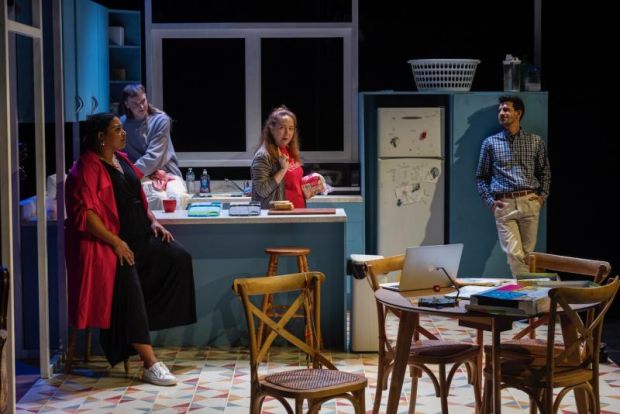
The production opened with nursery maids as narrators reading the story of “Beauty and the Beast” to their young wards. They told of how an Enchantress turned a cruel, selfish Prince into an ugly, bad-tempered Beast and his faithful servants into furniture. To break the spell, the Beast must learn to love another and earn her love in return before the last petal falls from an enchanted rose.

Photo : Ethan Seckam

The stage then became the village outside the forest around the Beast’s castle and the story continued …

In the first two performances the “Tale” cast took the stage, with Belle (Samar Basili-Klopper) meeting her Beast (Ethan Seckham) and escaping the clutches of  her bête-noir Gaston, (Alex Egic-Wilson) and his silly friend Le Fou (Cassandra Butler) with the help of the Beast’s henchmen Lumière the candelabra (Harry Little) and Cogsworth the clock (Alyssa Wallwork). Sophie Jack was Mrs Potts the tea pot, Maya Tobin was a cute cup called Chip, Anya Schryver was the wardrobe and Penelope Mortimer was Babette, a very stylish feather duster

Saturday night it was Isabel Mrsic who played Belle with Parker Bradley her bewitched Beast. Tyler Thorovsky was her self-important suitor Gaston and Jordan Mikulandra his funny off-sider Le Fou. Ethan Azzopardi was a lustrous Lumière and Xavier Billett a very watch-ful Cogsworth. Xara Schryver was Mrs Potts, Isabella Oreshkin was Chip the cup, Anya Schryver re-appeared as the wardrobe and Jorja Sharpe was a feathery Babette.

Photo : Ethan Seckam

These performers were as professional as young actors could be. Their timing was excellent, especially their comic timing, and their voices, in the many songs, were clear and quite powerful. Most of all, there was a sense of commitment and focus that it is unusual to see in youth productions. From the youngest to the more mature performers, whether actors or dancers, the focus and concentration was impressive.

The characterisation was also impressive. There was a mature understanding of the characters and their relationships that was obviously the result of clearly explained direction and understanding encouragement. It was clear that these young people appreciated what they learnt about bringing a character to life – as well as the  chance to do so.

Beauty and the Beast closed after full houses for all four performances – and two days later began rehearsals for its next production, 13  the Musical a coming-of-age story where the whole cast is teenagers!

Photo : Grant Leslie Photography

Wild Heart is a busy company that does more than “put on a show”. It guides and nurtures the young people in its productions in theatre etiquette as well as performance skills – and ensures that they have fun along the way.

“To say these young people have surpassed every expectation is an understatement,” say Nick Leech and Simone Dawson in their program notes. “Each week we’ve witnessed the artistic growth and development of everyone in this show”.

Also published in Stage Whispers magazine

Doubt

By John Patrick Shanley. Sydney Theatre Company. Director: Marion Potts. Roslyn Packer Theatre. Jun 30 – Aug 2, 2026

Reviewed : 9 July, 2026 *

Photo : Prudence Upton

Doubt can be a bond as powerful and sustaining as certainty”.

John Patrick Shanley wrote Doubt in 2004 but set the play in the 1960s, a time when America and the world were beginning to see the beginning of political, religious and social changes that would shape the six decades that followed.

In 1964 Shanley was a student at a Catholic school run by the Sisters of Charity in the Bronx. “These women dressed in black, believed in Hell, obeyed their male counterparts, and educated us. The faith, which held us together, went beyond the precincts of religion. It was a shared dream we agreed to call Reality.” Doubt is about the frailty of that reality.

Photo : Prudence Upton

The play is set in St. Nicholas Church School in The Bronx. The Principal, Sister Aloysius Beauvier, is a rigid disciplinarian, ultra-conservative, averse to change. She even disapproves of using ball point pens.

Young Sister James is trusting and gentle. She is a dedicated teacher, committed to her students, keen to awaken them to history and literature but begins to doubt herself when Aloysius questions her caring classroom manner, or allowing the students to study art.

Father Flynn, a recently appointed young priest, is determined to bring more liberal ideas to the parish – even inserting some popular songs into the Christmas pageant. He coaches the boys at basketball, listens when they are in trouble.

When Aloysius learns from James that Flynn has had a one-to-one meeting with Donald Muller, the first Black student to be enrolled in the school, her doubts about the young priest are aroused. When she confronts Flynn in the presence of Sister James, he denies anything wrong with his actions. Yet the seeds of doubt begin to germinate – because in words from Flynn’s sermon that opens the play …

“Doubt can be a bond as powerful and sustaining as certainty”.

Photo : Prudence Upton

Pamela Rabe inhabits the role of Sister Aloysius as bleakly as the severe black vestments she wears. She holds the character as rigidly as the commitment she has made to the church and its rules and constraints. She seldom smiles and shows little warmth except for a brief moment when she refers to an almost forgotten past.

She treats Sister James with condescending superiority, belittling her enthusiasm, teaching method and her youthful acceptance of change and admiration for Father Flynn’s more relaxed, caring approach to his work in the parish. She is similarly condescending to Donald Muller’s mother when she calls her in to discuss the boy’s relationship with Father Flynn.

Aloysius is a hard woman and Rabe makes her fiercely firm, unflexible in her cynical outlook on the world: “Every easy choice today will have its consequence tomorrow”.

The diminutive Sister James as played by Shannen Alyce Quan has overwhelming trust – in her church, in Sister Aloysius, in Father Flynn and the future. Quan makes her bright, optimistic, happily accepting the commitment to her vows and the children in her care. She is therefore intimidated at first by Aloysius’ position, but as her superior becomes even more judgemental, she begins to question …

Photo : Prudence Upton

“You just don’t like him! You don’t like it that he uses a ballpoint pen. You don’t like it that he takes 3 lumps of sugar in his tea … and you are letting that convince you of something that’s terrible…”

Best known for his work on screen, Sam Reid brings Father Brendan Flynn to warm, youthful compassion on the stage. Reid finds not only Flynn’s seemingly less restrictive “Vatican II” attitude, but a strong belief in the patriarchal hierarchy of the church. He makes Flynn disarmingly charismatic in his approach to the parish and the children, but patronisingly haughty in his reactions to Sister Aloysius.

When she invites him to discuss the Christmas pageant, he sits at her desk and takes charge of the meeting. When she then confronts him with an accusation of misconduct, Reid’s Flynn denies it with contempt and eventually reverts the true to androcentric base of the church: “You have no right to act on your own!” he says,” You have taken vows, obedience being one! You answer to us! You have no right to step outside the church!”

Yet Aloysius does! She calls Mrs Muller to the school and confronts her with her suspicion of Flynn’s influence on her son. But Muller is a strong woman too. She has lived with discrimination and fought hard for her son’s placement at the school and Zindzi Okenyo finds gritty strength and courage in her portrayal of Muller.

Photo : Prudence Upton

She stands firm in the face of Aloysius’s arrogance and rejects her suggestive accusations compellingly: “Sister, I don’t know if you and me are on the same side. I’ll be standing with my son and those who are good with my son. It’d be nice to see you there.”

Reid sustains Flynn’s denial of wrongdoing. Aloysius continues to fuel her doubt. And the fraught atmosphere in the grim school becomes as ominous as the bleak winter darkness that begins to descend on the tenements of the Bronx that frame Bob Cousins’ stark, austere set. With Damien Cooper’s misty light heralding a fluttering of snow, winter settles on the stage as coldly as the last word of the play.

The messages in Doubt reach beyond 1964 into a world that is questions even more strongly what is real, what is true, what to accept, when to doubt.

Shanley suggests that “Doubt requires more courage than conviction”.

First published in Stage Whispers magazine


nice things you might like ….